یک نوع جدید TRPC6 (c.131C>T، p.(Pro44Leu)) مرتبط با گلومرولواسکلروز سگمنتال کانونی: گزارش مورد

خلاصه
Background:
Pathogenic variants in the transient receptor potential cation channel subfamily C member 6 (TRPC6) cause autosomal dominant focal segmental glomerulosclerosis (FSGS). We report a patient with early-onset FSGS carrying a novel TRPC6 نوع قبلی توصیف نشده.
Case presentation:
A 21-year-old Chinese male presented with proteinuria (3.17g/24h) and mild renal insufficiency (Cr 103 μmol/L). Renal biopsy confirmed FSGS, not otherwise specified (NOS). Genetic testing was initially declined due to cost concerns. He received losartan, dapagliflozin, strict salt restriction, and ambrisentan, achieving proteinuria reduction to 0.7g/24h without immunosuppression. Two years later, genetic testing identified a novel TRPC6 نوع: c.131C>T p.(Pro44Leu)، در پایگاه های داده عمومی بسیار نادر است و به عنوان گونه ای با اهمیت نامشخص طبقه بندی می شود.
Conclusion:
This is the first report of the TRPC6 نوع p.Pro44Leu در حال گسترش طیف متغیر TRPC6-FSGS مرتبط. تصمیم بالینی برای توقف سرکوب سیستم ایمنی عمدتاً توسط فنوتیپ بیمار هدایت می شود (سن جوان، پروتئینوری ساب نفروتیک، FSGS-NOS، و عدم وجود علل ثانویه)؛TRPC6 نوع، اگرچه به عنوان VUS طبقه بندی می شود، شواهد حمایتی برای یک علت ژنتیکی ارائه می دهد و این رویکرد مدیریتی را تقویت می کند. این مورد نشان میدهد که آزمایش ژنتیکی میتواند مدیریت شخصیشده در بیماران جوان مبتلا به FSGS را هدایت کند و یک چارچوب عملی برای جلوگیری از عوارض غیرضروری مرتبط با درمان ارائه دهد. این مورد همچنین نشان میدهد که هزینهها و موانع روانی میتوانند تشخیص ژنتیکی را به تاخیر بیندازند و ارزش درمان حمایتی اولیه در FSGS ژنتیکی را برجسته میکند.
Introduction
A 21-year-old Chinese male presented with proteinuria (3.17 g/24h) and mild renal insufficiency (creatinine 103 μmol/L). Renal biopsy confirmed focal segmental glomerulosclerosis (FSGS), not otherwise specified. Genetic testing identified a novel TRPC6 واریانت، c.131C>T p.(Pro44Leu). بیمار تنها با درمان نگهدارنده به کاهش قابل توجهی در پروتئینوری دست یافت.
گلومرولواسکلروز فوکال سگمنتال (FSGS) یکی از علل شایع سندرم نفروتیک مقاوم به استروئید است که اغلب به مرحله نهایی بیماری کلیوی پیش می رود.; ).اشکال ژنتیکی موارد خیلی زودرس یا خانوادگی را تشکیل می دهند. اجماع بینالمللی نشان میدهد که FSGS مدلی از آسیب گلومرولی با علل مختلف است که بر روی اختلال عملکرد سلولهای بدن همگرا میشوند.برخی از بیماران پروتئینوری ساب نفروتیک دارند و به سرکوب سیستم ایمنی پاسخ ضعیفی میدهند که شناسایی علت را ضروری میکند.).
TRPC6 یک کانال کاتیونی غیرانتخابی را که در دیافراگم شکافی پودوسیت ها قرار دارد رمزگذاری می کند.از سال 2005، بیش از 40 بیماری زا TRPC6 انواع گزارش شده است، عمدتاً گونه های افزایش عملکرد اشتباه (; ; ; ; ; ما یک بیمار با شروع زودرس FSGS را گزارش می کنیم که حامل یک TRPC6 نوع، c.131C>T p.(Pro44Leu)، قبلاً در ادبیات توضیح داده نشده است.
Case presentation
A 21-year-old Chinese male (self-identified) presented with throat discomfort and frothy urine. He had no history of hypertension, diabetes, or kidney disease in his family. He denied smoking or alcohol use. Physical examination showed blood pressure 119/77 mmHg, body mass index 20.58 kg/m2 و بدون ادم. آزمایشات آزمایشگاهی پروتئین ادرار 24 ساعته 3.17 گرم را نشان می دهد (محدوده مرجع
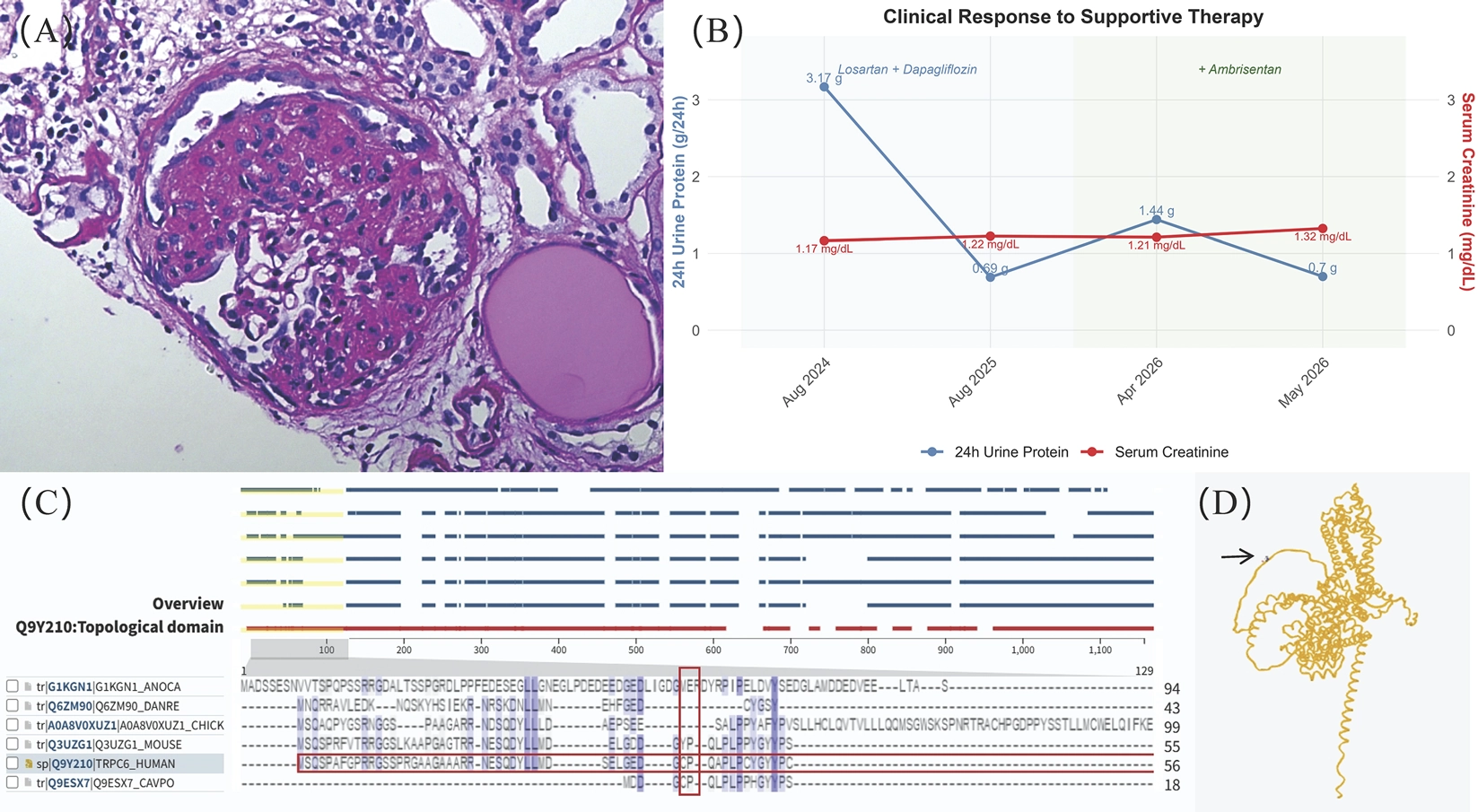
Renal biopsy was performed. Immunofluorescence demonstrated IgA (+), IgM (+), and C3 (+∼++). Light microscopy revealed FSGS, not otherwise specified (15 glomeruli; one with ischemic wrinkling, one with segmental sclerosis; approximately 5% tubular atrophy and interstitial fibrosis) (Figure 1A).
Although genetic testing was initially recommended as a means to establish an etiologic diagnosis and guide therapeutic decision-making, the patient declined due to cost concerns. Two years later, following repeated counseling on the potential clinical utility of genetic results, he provided consent. Exome sequencing (KingMed Diagnostics) identified a heterozygous missense TRPC6 نوع: NM_004621.6:c.131C>T p.(Pro44Leu) در اگزون 1 (chr11:101,454,104 G>A، GRCh37). توالییابی سانجر این گونه را تأیید کرد.
The variant is extremely rare in public databases. It is present at very low frequency in gnomAD (allele frequency: 4.0 × 10⁻⁶؛ 1/234090 آلل در exomes gnomAD) و با فرکانس های کمی بالاتر در سایر پایگاه های داده به خوبی کنترل شده (مثلا تا 7.7 × 10⁻⁵ در AllofUs). در ClinVar، LOVD، یا dbSNP گزارش نشده است. با توجه به دانش ما، هیچ ادبیات قبلی این گونه را در ارتباط با FSGS توصیف نکرده است. یک نوع همسایه (p.Pro44Ser) در فرکانس جمعیت بسیار پایین در پایگاه های داده عمومی وجود دارد (فرکانس آلل تجمعی gnomAD: 0.0001380.000،000،000،000،000،000،000،000،000،000،000،000،000،000،000،000،000،000،000،000،000،000،00،000،000،000،000،000،000،000،000،000،000،000،000،000،000،000،000138000138000001380000138 گزارش شده است. آلل ها). با استفاده از پلت فرم فرانکلین (رهنمودهای ACMG 2022)، این نوع با PM2 (فرکانس جمعیت بسیار کم) و BP4 (بیشتر in silico ابزار پیش بینی خوش خیم. نمره کل 0.149)، در حالی که SIFT و MutationTaster مضر را پیش بینی کردند. به عنوان یک نوع با اهمیت نامشخص طبقه بندی شد (Supplementary Table 1).
Multiple sequence alignment revealed Pro44 is conserved across mammals but absent in non-mammalian vertebrates, suggesting mammal-specific acquisition (Figure 1CFigure 1D).
No immunosuppressants were used. The patient received losartan, dapagliflozin, ambrisentan, and strict dietary sodium restriction. At follow-up, 24-h urinary protein decreased to 0.7 g with stable renal function. The clinical timeline is summarized in Figure 1B.
Discussion
We report a Chinese individual with biopsy-proven FSGS carrying a novel TRPC6 نوع، c.131C>T p.(Pro44Leu)، که در پایگاه های داده عمومی بسیار نادر است (فرکانس آلل gnomAD: 4.0 × 10⁻⁶). برتری پیش بینی های خوش خیم از اکثر in silico ابزار، همراه با فقدان مطالعات عملکردی، از طبقه بندی آن به عنوان گونه ای با اهمیت نامشخص پشتیبانی می کند. بیمار تنها با درمان نگهدارنده به کاهش قابل توجهی در پروتئینوری دست یافت که نشان دهنده مسیر خفیف بیماری است. مطالعه اخیر در مقیاس بزرگ توسط Wooden et al.) تجزیه و تحلیل 64 بیمار از 39 خانواده با TRPC6TRPC6 نوع Q134P در یک خانواده FSGS با شروع دیررس، نشان می دهد که تغییرات عملکردی در TRPC6 می تواند منجر به یک فنوتیپ خفیف و تاخیری شود.). اخیراً، یک مطالعه کوهورت چینی بر روی بیماران بزرگسال FSGS گزارش داد که جهش های ژنتیکی با پیش آگهی کوتاه مدت کلیوی بهتر مرتبط است، اما هیچ تفاوتی در پیش آگهی طولانی مدت وجود ندارد.). این مشاهدات اهمیت اعتبار سنجی عملکردی و داده های مرجع خاص جمعیت را برای تفسیر نشان می دهد TRPC6 انواع در اقوام مختلف. ما تشخیص می دهیم که VUS نباید به تنهایی تصمیمات بالینی را هدایت کند. در اینجا، تصمیم برای جلوگیری از سرکوب سیستم ایمنی توسط فنوتیپ دیکته شد. یافته های ژنتیکی حمایت گذشته نگر بود. این عمل با دستورالعملهای منتشر شده مطابقت دارد مبنی بر اینکه VUS نباید به تنهایی برای تصمیمگیریهای بالینی استفاده شود، در حالی که تشخیص داده میشود که آزمایش ژنتیکی همچنان میتواند راهنمایی را هنگام ادغام با فنوتیپ ارائه کند.).
بر اساس اجماع پودوسیتوپاتی (فنوتیپ این بیمار (شاخص توده بدنی 20.58، بدون دیابت، بدون وزن کم هنگام تولد) عوامل تطبیقی را بعید می سازد. بیماری خودایمنی معمولاً با سندرم نفروتیک تظاهر می کند. بنابراین، پودوسیتوپاتی ژنتیکی سازگار است.
یک رویکرد تشخیصی عملی باید FSGS ژنتیکی را در بیمارانی با شروع کمتر از 30 سال، سابقه خانوادگی بیماری کلیوی، یافتههای بیوپسی حاکی از FSGS که در غیر این صورت مشخص نشده است، پروتئینوری ساب نفروتیک، یا عدم پاسخ به درمان سرکوبکننده ایمنی در نظر گرفته شود.; ). در چنین بیمارانی، آزمایشات ژنتیکی اولیه می تواند به تشخیص اشکال تک ژنی از FSGS اولیه کمک کند، بنابراین از دوره های غیر ضروری کورتیکواستروئیدها یا مهارکننده های کلسینورین که عوارض جانبی قابل توجهی دارند، اجتناب می شود. حتی در محیطهای با منابع محدود که آزمایش ژنتیکی به آسانی در دسترس نیست، فنوتیپ بالینی به تنهایی ممکن است آزمایش درمان نگهدارنده را قبل از شروع سرکوب سیستم ایمنی توجیه کند. بیمار ما نمونه ای از این رویکرد است: درمان نگهدارنده از قبل شروع شده بود. آزمایش ژنتیک بعداً شواهدی را ارائه کرد و این استراتژی را مستحکم کرد. مهار RAS همراه با داپاگلیفلوزین، هیپرفیلتراسیون را در نفرونهای باقیمانده توسط مکانیسمهای همودینامیک و غیرهمودینامیک بهبود میبخشد، با شواهد قوی از استفاده از آن در بیماری مزمن کلیه، از جمله بیماران مبتلا به ضایعات FSGS (). آنتاگونیست های گیرنده اندوتلین اثرات ضد پروتئینوری در بیماری مزمن کلیوی نشان داده اند. در نفروپاتی IgA و سندرم آلپورت، یک بیماری گلومرولی ارثی که میتواند با ضایعات مشابه FSGS تظاهر کند، آنتاگونیستهای انتخابی گیرنده اندوتلین A، از جمله آتراسنتان و آمبریزنتان، کاهش قابلتوجهی در پروتئینوری با حفظ عملکرد کلیوی نشان دادهاند.; ). از نظر مکانیکی، محاصره گیرنده اندوتلین A آسیب اندوتلیال گلومرولی را کاهش می دهد، تکثیر مزانژیال را کاهش می دهد و مسیرهای سودآوری مانند سیگنالینگ AKT/GSK-3β را تعدیل می کند.). اگرچه اسپارسنتان، یک آنتاگونیست دوگانه گیرنده اندوتلین-آنژیوتانسین، کاهش بیشتری در پروتئینوری در FSGS در مقایسه با ایربسارتان نشان داد.) در چین در دسترس نیست. با توجه به اثرات محافظتی بازدارنده مهار RAS، مهار SGLT-2 و آنتاگونیستهای گیرنده اندوتلین در بیماریهای گلومرولی پروتئینوریک، از جمله بیماریهای کلیوی ژنتیکی که ضایعات FSGS را نشان میدهند، ما این شواهد را با افزودن آمبریزنتان به رژیم نگهدارنده برای بیمار خود اعمال کردیم.
نوع p.Pro44Leu در بالادست اولین دامنه تکرار آنکیرین (بقایای 97-316)، در خارج از کانون جهش کلاسیک FSGS در درون خود آنکرین تکرار میشود. مکان در معرض سطح آن – پیشبینی میشود که از هسته کانال در پیکربندی هموتترامری TRPC6 به سمت بیرون باشد – به جای عملکرد منافذ، دخالت در تعاملات پروتئین-پروتئین را نشان میدهد. همراه با شبکه تعامل مشاهده شده بین TRPC6 و پروتئین های شکاف-دیافراگمی (NPHS2 و NPHS1) و گزارش های ادبیات مربوط به اتصال نفرین به انتهای N TRPC6 (ما فرض می کنیم که p.Pro44Leu ترکیب سطح محلی را تغییر می دهد و با برهمکنش پروتئین های شکاف دیافراگم تداخل می کند. علاوه بر این، RNF24 قاچاق TRPC6 را از طریق یک دامنه تکرار ankyrin تنظیم می کند.) اگرچه Pro44 در بالادست است، قابل قبول است که این نوع بر روی ترکیب دامنه تکرار ankyrin تأثیر می گذارد و تنظیم با واسطه RNF24 را مختل می کند. با این حال، این تفسیر مکانیکی همچنان فرضی است و شواهد تجربی مستقیم برای تایید بیماری زایی مورد نیاز است.
شناسایی TRPC6 نوع در این بیمار پیامدهای بالینی فوری دارد و گزینه های درمانی آینده را باز می کند. شفاهی TRPC6 مهارکننده (BI 764198) اخیراً نرخ پاسخ پروتئینوری 35% را در آزمایش فاز 2 نشان داد.). برای این بیمار و دیگران با TRPC6– مرتبط با FSGS، تشخیص ژنتیکی نه تنها امکان جلوگیری از سرکوب غیرضروری ایمنی را فراهم میکند، بلکه ممکن است واجد شرایط بودن برای درمانهای هدفمند نوظهور را در صورت در دسترس قرار گرفتن، اطلاع دهد. در مناطقی که این عوامل هنوز در دسترس نیستند، آزمایش ژنتیک هنوز با اطلاع از پیش آگهی، راهنمایی مشاوره خانواده، و حمایت از تصمیم گیری مشترک آگاهانه بین پزشکان و بیماران، ارزش ارائه می دهد.
این گزارش طیف انواع TRPC6-FSGS مرتبط است و یک مثال عملی از اینکه چگونه آزمایش ژنتیکی می تواند مستقیماً مدیریت بالینی را در بیماران جوان مبتلا به FSGS غیرقابل توضیح ارائه دهد ارائه می دهد. ادغام تشخیصهای ژنتیکی در عمل معمول نفرولوژی، تصمیمگیری درمانی شخصیسازی شده را آگاه میکند، آسیبهای غیرضروری مربوط به درمان را به حداقل میرساند و واجد شرایط بودن بیمار را برای درمانهای هدفمند نوظهور تسهیل میکند. ما از آزمایش ژنتیکی اولیه در FSGS تک ژنی مشکوک برای بهینه سازی نتایج بیمار و استفاده از منابع حمایت می کنیم.
Clinical takeaway
This case illustrates that structural modeling of novel variants can provide supportive insights that may inform clinical reasoning, even in the absence of functional studies. The surface-exposed, non-core location of p.Pro44Leu was consistent with the patient’s mild clinical phenotype. We suggest that structural prediction should be considered alongside clinical features in the interpretation of genetic variants in FSGS to guide risk stratification and therapeutic decision-making.
Limitations
This study has several limitations. First, functional studies (e.g., patch-clamp, calcium imaging) were not performed to validate the functional impact of the variant. Second, the patient declined family screening, so the origin of the variant could not be determined. Third, available cryo-EM structures lack the N-terminal region containing Pro44; therefore, the AlphaFold-predicted structure awaits experimental validation. Fourth, the follow-up period is relatively short (21 months), and long-term prognosis requires further observation. Despite these limitations, the extreme rarity, evolutionary conservation, surface-exposed location, and phenotypic consistency suggest that this variant could be a candidate susceptibility variant for FSGS. However, the clinical phenotypic association suggested by this case should not be equated with definitive molecular pathogenic validation, which would require functional and familial segregation studies.
Patient perspective
The patient initially declined genetic testing due to high cost and uncertainty. After repeated counseling over 2 years, he consented. He reported good adherence to supportive therapy and salt restriction, as proteinuria reduction reinforced his confidence. He declined family segregation analysis, concerned that his parents might feel guilty or anxious, highlighting psychological challenges in genetic diagnosis.
Statements
Data availability statement
The datasets presented in this article are not readily available because of ethical and privacy restrictions. Requests to access the datasets should be directed to the corresponding author/s. The TRPC6 variant (NM_004621.6:c.131C>T) is accessible in ClinVar under accession number SCV007596794.
بیانیه اخلاق
Ethical approval was not required for the studies involving humans because Ethical approval was not required for this case report according to the Institutional Review Board of Beijing Luhe Hospital Affiliated to Capital Medical University. This is a single case report with no experimental interventions; the study was conducted in accordance with the Declaration of Helsinki. Written informed consent was obtained from the patient. The studies were conducted in accordance with the local legislation and institutional requirements. The participants provided their written informed consent to participate in this study. Written informed consent was obtained from the individual(s) for the publication of any potentially identifiable images or data included in this article.
سهم نویسنده
FY: Writing – original draft. XW: Methodology, Writing – original draft. YL: Data curation, Writing – original draft. KS: Writing – original draft, Visualization. RD: Writing – original draft, Methodology. LW: Methodology, Writing – original draft. GM: Writing – original draft, Methodology. JY: Methodology, Writing – original draft. ZL: Writing – review and editing, Supervision.
تامین مالی
The author(s) declared that financial support was not received for this work and/or its publication.
قدردانی ها
The authors thank the patient for his participation and cooperation.
تضاد منافع
The author(s) declared that this work was conducted in the absence of any commercial or financial relationships that could be construed as a potential conflict of interest.
بیانیه تولید هوش مصنوعی
The author(s) declared that generative AI was used in the creation of this manuscript. AI-assisted language editing was used to improve the readability of this manuscript; the authors take full responsibility for the final content.
Any alternative text (alt text) provided alongside figures in this article has been generated by Frontiers with the support of artificial intelligence and reasonable efforts have been made to ensure accuracy, including review by the authors wherever possible. If you identify any issues, please contact us.
یادداشت ناشر
All claims expressed in this article are solely those of the authors and do not necessarily represent those of their affiliated organizations, or those of the publisher, the editors and the reviewers. Any product that may be evaluated in this article, or claim that may be made by its manufacturer, is not guaranteed or endorsed by the publisher.
References
-
BhadangeR.GaikwadA. B. (2026). Modulation of AKT/GSK-3β signaling by ambrisentan alleviates chronic kidney disease. Pathol. Res. Pract.270، 156402. 10.1016/j.prp.2026.156402
-
D’AgatiV. D.KaskelF. J.FalkR. J. (2011). Focal segmental glomerulosclerosi. N. Engl. J. Med.365، 2398—2411. 10.1056/NEJMra1106556
-
KandaS.HaritaY.ShibagakiY.SekineT.IgarashiT.InoueT.et al (2011). Tyrosine phosphorylation-dependent activation of TRPC6 regulated by PLC-γ1 and nephrin: effect of variants associated with focal segmental glomerulosclerosis. Mol. Biol. Cell22، 1824—1835. 10.1091/mbc.E10-12-0929
-
LiuZ.ZhangH.ZhaoS.LiuL.ZhaoX.WangS.et al (2021). Novel gain-of-function mutation of TRPC6 Q134P contributes to late onset focal segmental glomerulosclerosis in a Chinese pedigree. Nephrol. Carlt.26، 1018—1025. 10.1111/nep.13963
-
LussierM. P.LepageP. K.BousquetS. M.BoulayG. (2008). RNF24, a new TRPC interacting protein, causes the intracellular retention of TRPC. Cell Calcium43، 432—443. 10.1016/j.ceca.2007.07.009
-
MiaoJ.ZandL. (2025). Genotype-Phenotype correlations with TRPC6-Associated podocytopathy. J. Am. Soc. Nephrol.36، 177—180. 10.1681/asn.0000000598
-
MinM.WangQ. Y.ZhuL.WangJ. Q.ZhangJ. (2025). Clinical significance of genetic mutations in adult patients with focal segmental glomerulosclerosis. Kidney Res. Clin. Pract.10.23876/j.krcp.25.082
-
MukerjiN.DamodaranT. V.WinnM. P. (2007). TRPC6 and FSGS: the latest TRP channelopathy. Biochim. Biophys. Acta1772، 859—868. 10.1016/j.bbadis.2007.03.005
-
ReiserJ.PoluK. R.MöllerC. C.KenlanP.AltintasM. M.WeiC.et al (2005). TRPC6 is a glomerular slit diaphragm-associated channel required for normal renal function. Nat. Genet.37، 739—744. 10.1038/ng1592
-
RheaultM. N.AlpersC. E.BarrattJ.SavigeJ.KretzlerM.HodginJ. B.et al (2023). Sparsentan versus ایربسارتان در گلومرولواسکلروزیس سگمنتال کانونی. N. Engl. J. Med.389، 2436—2445. 10.1056/NEJMoa2308550
-
RomagnaniP.TangS. C. W.WeinsA.HuberT. B.OsafoC.AndersH.-J. (2025). Podocytopathies. Nat. Rev. Dis. Prim.11، 87. 10.1038/s41572-025-00671-w
-
RosenbergA. Z.KoppJ. B. (2017). Focal segmental glomerulosclerosis. Clin. J. Am. Soc. Nephrol.12، 502—517. 10.2215/cjn.05960616
-
SavigeJ. (2024). Tips for testing adults with suspected genetic kidney disease. Am. J. Kidney Dis.83، 816—824. 10.1053/j.ajkd.2023.10.011
-
ShiY.YeN.WangG.ChengH. (2025). Meta-analysis of randomized controlled trials assessing the efficacy and safety of endothelin receptor antagonists in CKD. Clin. J. Am. Soc. Nephrol.21، 401—413. 10.2215/CJN.0000000928
-
SongZ. R.LiY.ZhouX. J.ZhangH. (2024). A pilot Study on protective effect of ambrisentan on proteinuria in patients with Alport Syndrome. Kidney Int. Rep.9، 3067—3069. 10.1016/j.ekir.2024.07.027
-
TrachtmanH.KretzlerM.GesualdoL.AppelG. B.RheaultM. N.AlpersC. E.et al (2026). TRPC6 inhibition for the treatment of focal segmental glomerulosclerosis: a randomised, placebo-controlled, phase 2 trial of BI 764198. Lancet407، 587—598. 10.1016/s0140-6736(25)02255-x
-
VrieseA. S. D.SethiS.NathK. A.GlassockR. J.FervenzaF. C. (2018). Differentiating primary, genetic, and secondary FSGS in adults: a clinicopathologic approach. J. Am. Soc. Nephrol.29، 759—774. 10.1681/asn.2017090958
-
WheelerD. C.JongsN.StefanssonB. V.ChertowG. M.GreeneT.HouF. F.et al (2022). Safety and efficacy of dapagliflozin in patients with focal segmental glomerulosclerosis: a prespecified analysis of the dapagliflozin and prevention of adverse outcomes in chronic kidney disease (DAPA-CKD) trial. Nephrol. Dial. Transpl.37، 1647—1656. 10.1093/ndt/gfab335
-
WinnM. P.ConlonP. J.LynnK. L.FarringtonM. K.CreazzoT.HawkinsA. F.et al (2005). A mutation in the TRPC6 cation channel causes familial focal segmental glomerulosclerosis. Science308، 1801—1804. 10.1126/science.1106215
-
WoodenB.BeenkenA.MartinelliE.JahanZ.LimT. Y.MitrottiA.et al (2025). Natural history and clinicopathological associations of TRPC6-Associated podocytopathy. J. Am. Soc. Nephrol.36، 274—289. 10.1681/asn.0000000501
خلاصه
Keywords
case report, focal segmental glomerulosclerosis, novel variant, podocytopathy, TRPC6
Citation
Yang F, Wang X, Li Y, Su K, Ding R, Wu L, Ma G, Yang J and Li Z (2026) A novel TRPC6 variant (c.131C>T, p.(Pro44Leu)) associated with focal segmental glomerulosclerosis: a case report. در جلو. متاهل 17:1913168. doi: 10.3389/fgene.2026.1913168
Updates
Check for updates
حق چاپ
© 2026 یانگ، وانگ، لی، سو، دینگ، وو، ما، یانگ و لی.
This is an open-access article distributed under the terms of the Creative Commons Attribution License (CC BY). استفاده، توزیع یا تکثیر در انجمنهای دیگر مجاز است، مشروط بر اینکه نویسنده (ها) اصلی و صاحب (ها) حق چاپ تایید شده باشند و طبق رویه دانشگاهی پذیرفته شده، به انتشار اصلی در این مجله استناد شود. هیچ گونه استفاده، توزیع یا تولید مثلی که با این شرایط مطابقت نداشته باشد مجاز نیست.
*Correspondence: Zhongxin Li, lhyy6806@ccmu.edu.cn
سلب مسئولیت
تمام اظهارات بیان شده در این مقاله به تنهایی متعلق به نویسندگان است و لزوماً بیانگر اظهارات سازمان های وابسته به آنها یا ناشر، ویراستاران و داوران نیست. هر محصولی که ممکن است در این مقاله ارزیابی شود یا ادعایی که ممکن است توسط سازنده آن باشد، توسط ناشر تضمین یا تایید نمی شود.

